
Averaged billing
Learn how averaged billing works and how it is applied
What is averaged billing?
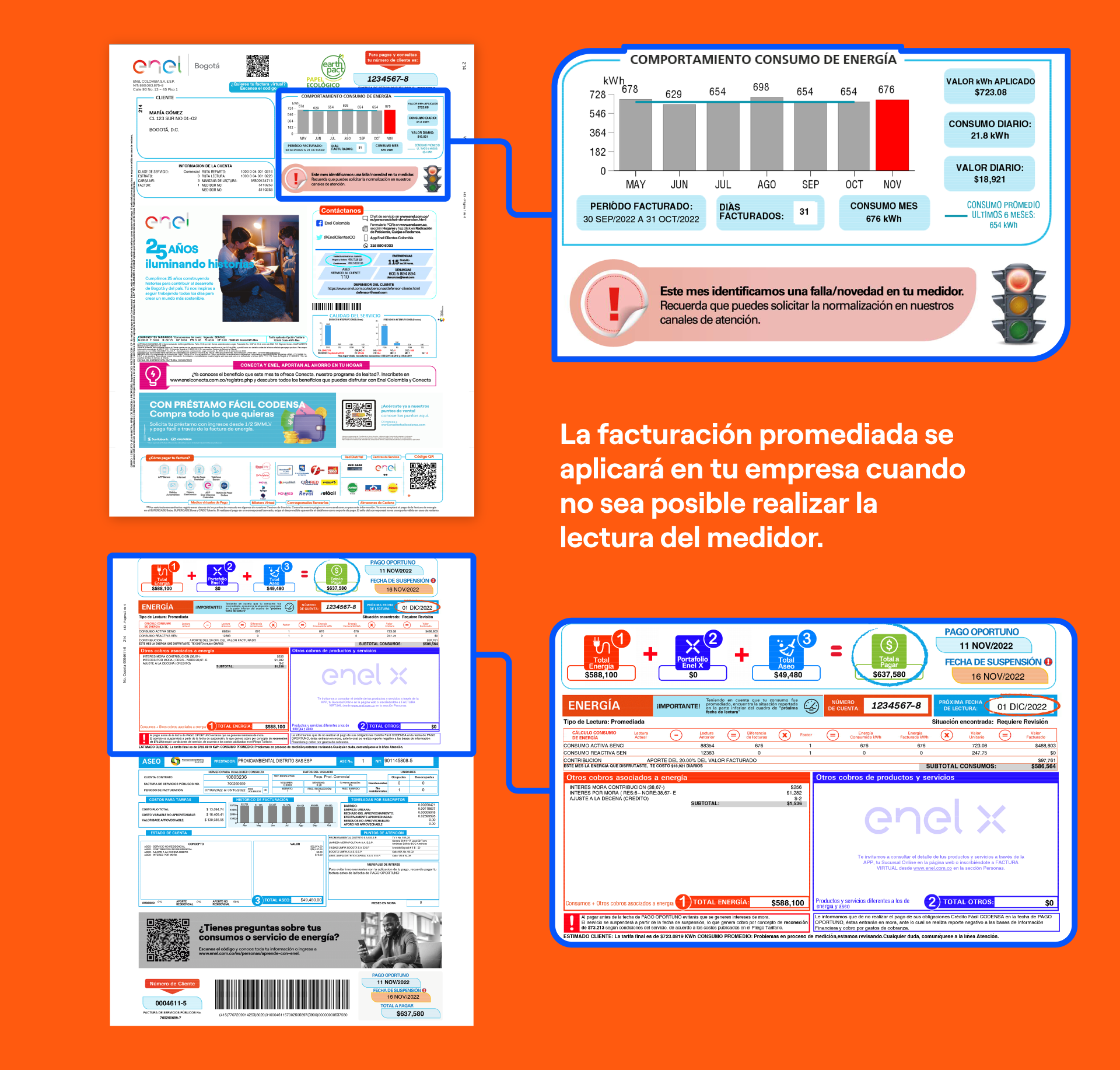
It is a billing process in which we calculate your charge based on your company’s average consumption over the past six months, when it is not possible to take a reading from the electricity meter.
Why should your company avoid averaged billing?
When averaged billing is applied, your company’s cash flow could be affected by charges resulting from the averaging process or from subsequent rebilling adjustments.
Why is averaged billing applied?
As energy retailers, we are required to apply averaged billing to companies and specify it on the bill when it is not possible to take a meter reading. This is established by Act 142 of 1994 and CREG Resolution 108 of 1997.
Learn more about averaged billing
Cases in which averaged billing will be applied
Averaged billing will be applied when our personnel are unable to take the meter reading and when significant consumption variations are identified.


How to avoid averaged billing
Report your meter reading
To avoid averaged billing, your company may report a self-reading of the meter through any of the following channels:
- Email: servicioalcliente.empresarial@enel.com
- Enel Clientes App
- Business hotline: 601 580 1000
- Enel web private area
Bill rebilling adjustment
Bill rebilling adjustment is the recalculation based on actual consumption after averaged billing has been applied. It is performed once the meter reading can be taken again. The rebilling adjustment may result in a credit to be applied to the bill or an additional amount to be charged. The calculation corresponds to the difference between the averaged consumption and the actual consumption recorded in the new reading.